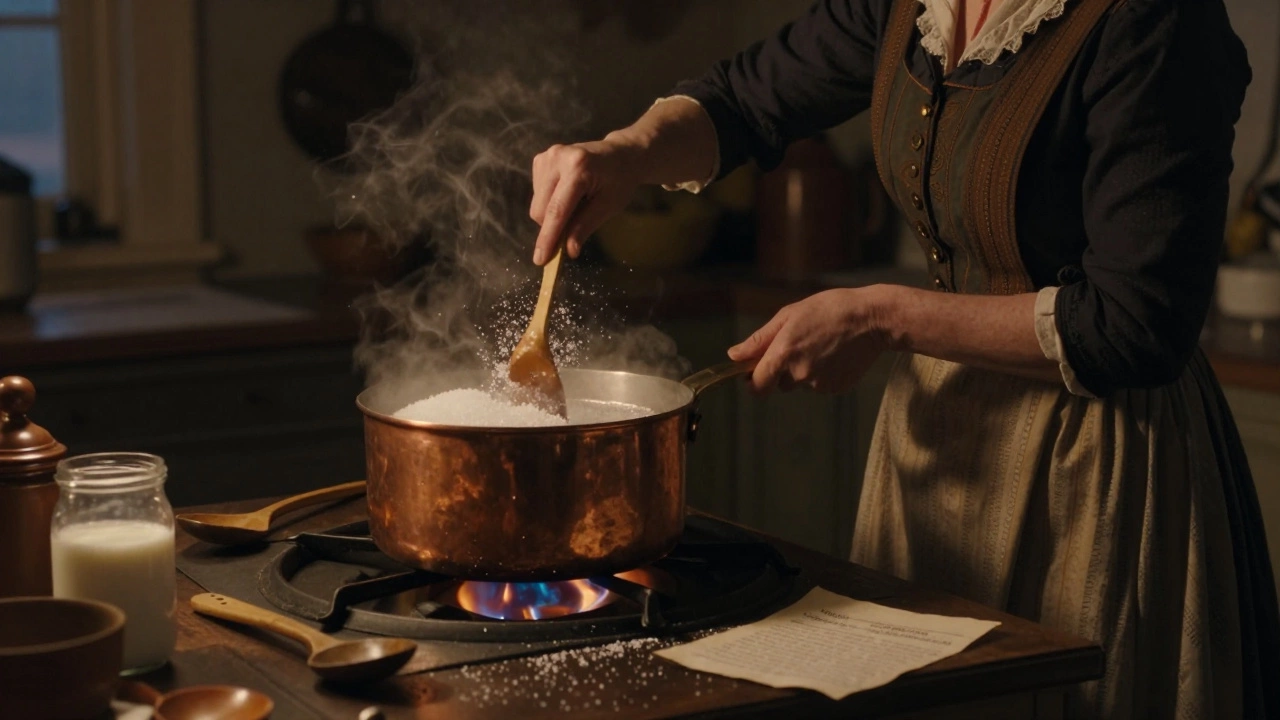
Fudge Temperature Checker
This tool helps you determine if your fudge mixture has reached the correct temperature for perfect texture. The ideal temperature range is 234-240°F (112-115°C).
Cold Water Test
Drop a small spoonful of the hot sugar mixture into a cup of cold water. If it forms a soft, pliable ball that flattens when you pick it up, you've reached the soft-ball stage (234-240°F). If it spreads out, it's not ready. If it hardens into a ball, you've gone too far.
Ever bite into a square of rich, melt-in-your-mouth fudge and wonder where it came from? You’re not alone. Fudge is one of those treats that feels timeless-like it’s always been there, wrapped in paper at a candy shop or layered in a holiday tin. But it wasn’t always this way. The truth about fudge’s origin is a little messy, a little sweet, and surprisingly American.
The Real Birthplace of Fudge
Fudge was invented in the United States, specifically in the late 1800s. There’s no single inventor, no patent filed, and no grand story of a chef in a lab. Instead, it started with a mistake. In 1886, a woman in Baltimore named Nancy Johnson-yes, the same Nancy Johnson who invented the hand-cranked ice cream maker-sent a recipe to a friend. She’d tried to make caramel but accidentally boiled the sugar too long. The result? A thick, grainy, sticky mess. Instead of tossing it, she stirred it until it smoothed out into something creamy. That’s the earliest known version of fudge.
But it didn’t stay in Baltimore. The real spread happened at Vassar College in New York. Students there, mostly young women in the 1890s, started making fudge as a social activity. They’d gather in dorm rooms, heat sugar, butter, and milk on hot plates, and stir for hours. The process was messy, fun, and surprisingly addictive. Word got around. By 1900, fudge was a campus tradition-and soon, a national one.
Why Fudge Took Off in America
Fudge didn’t become popular because it was fancy. It became popular because it was easy. Unlike cakes or pies, you didn’t need an oven. You just needed a saucepan, a candy thermometer (or a good eye), and patience. For families in the early 1900s, without modern appliances, fudge was a weekend project that felt like magic. A little sugar, a splash of cream, a pat of butter-and suddenly, you had something that tasted like luxury.
By the 1920s, fudge was sold in corner stores, at county fairs, and in department store candy counters. In cities like Chicago and Pittsburgh, small shops began specializing in it. One famous shop, Whitman’s a Boston-based confectionery founded in 1842 that became a national brand by the 1930s, started packaging fudge in decorative tins. It became a go-to gift. People didn’t just eat fudge-they gave it. And that’s how it stuck.
What Makes American Fudge Different
Not all fudge is the same. The American version-especially the kind you find in candy shops today-is made with three key ingredients: sugar, butter, and evaporated milk. It’s cooked to the soft-ball stage (234-240°F), then stirred until it crystallizes into a smooth, dense texture. This is different from European versions.
For example, British toffee is harder, chewier, and often includes nuts. Italian torrone is more like a nougat, with honey and egg whites. French pralines are coated in caramelized sugar and almonds. None of them are fudge. American fudge is defined by its creaminess, its melt, and its simplicity. It’s not about complexity. It’s about comfort.

How Fudge Spread Around the World
Once American soldiers arrived in Europe during World War I and II, they brought fudge with them. Local candy makers saw how much people loved it and started copying the recipe. In the UK, fudge became a staple at seaside resorts like Blackpool and Scarborough. In Canada, it’s a holiday tradition in Ontario and Quebec. Australia picked it up through American influence in the 1950s. Today, you’ll find fudge in Tokyo, Paris, and Cape Town-but the recipe still traces back to that Baltimore kitchen.
There’s one funny twist: many countries now claim fudge as their own. Scotland says it invented “fudge” from a traditional caramel candy called “tablet.” Canada insists its version with maple syrup is the original. But none of these predate the 1880s American version. The evidence is clear: fudge, as we know it, was born in the U.S.
Modern Fudge and Its Variations
Today, fudge has exploded into hundreds of variations. You’ve got chocolate fudge, peanut butter fudge, mint fudge, cookies and cream fudge, even bacon fudge. The base recipe hasn’t changed much-it’s still sugar, butter, and milk-but people now add espresso powder, sea salt, chili flakes, or bourbon. The rise of vegan fudge has also changed the game. Coconut milk replaces dairy. Maple syrup replaces granulated sugar. And it still melts the same way.
One thing hasn’t changed: the magic of stirring. Making fudge by hand is still the best way. Electric mixers can overwork it. A wooden spoon, slow stirring, and patience? That’s what gives it that perfect, velvety texture. It’s not just a dessert. It’s a ritual.
Why Fudge Still Matters
In a world of high-tech desserts and Instagram-worthy cakes, fudge is quiet. It doesn’t need a fancy mold. It doesn’t need piping bags or edible glitter. It’s just sweet, rich, and deeply satisfying. That’s why it survives. People still make it in their kitchens-not because it’s trendy, but because it connects them to something real.
It’s the treat your grandma made on a snowy afternoon. The one you wrapped in wax paper and slipped into a friend’s backpack. The candy that didn’t cost much but meant everything. Fudge isn’t about origin. It’s about memory. And that’s why, no matter where you are in the world, when you taste it, you feel like you’re home.
Is fudge originally from England?
No, fudge as we know it today was not invented in England. While the UK has its own traditional caramel candy called "tablet," which looks similar, true fudge-with its smooth, creamy texture made from sugar, butter, and milk-originated in the United States in the 1880s. British candy shops began making fudge after American soldiers introduced it during the World Wars, but it’s not native to England.
Can you make fudge without a candy thermometer?
Yes, you can. The old-school method is the "cold water test." Drop a small spoonful of the hot sugar mixture into a cup of cold water. If it forms a soft, pliable ball that flattens when you pick it up, you’ve reached the soft-ball stage (234-240°F). If it spreads out, it’s not ready. If it hardens into a ball, you’ve gone too far. This method works just as well as a thermometer-especially if you’re making fudge by hand.
Why does my fudge turn out grainy?
Grainy fudge happens when sugar crystals form too early. This usually occurs if you stir the mixture while it’s boiling. The agitation causes crystals to grow. To fix this, stir only before heating and after removing from the stove. Let the mixture cool slightly (to around 110°F) before stirring again. That’s when the magic happens-smooth, not grainy.
What’s the difference between fudge and caramel?
Fudge and caramel are both sugar-based candies, but they’re made differently. Fudge is cooked to the soft-ball stage (234-240°F) and then stirred to crystallize into a dense, creamy texture. Caramel is cooked much hotter-to the hard-ball or soft-crack stage (270-290°F)-which gives it a chewy, amber color and a deeper, toasted flavor. Fudge is smoother and melts in your mouth. Caramel is sticky and pulls apart.
Can you freeze fudge?
Yes, fudge freezes very well. Wrap it tightly in plastic wrap, then place it in an airtight container or freezer bag. It will last up to three months. When you’re ready to eat it, let it thaw at room temperature for an hour. The texture stays creamy, and the flavor doesn’t change. Freezing is a great way to make fudge ahead of holidays or gift-giving seasons.
Where to Try Authentic Fudge Today
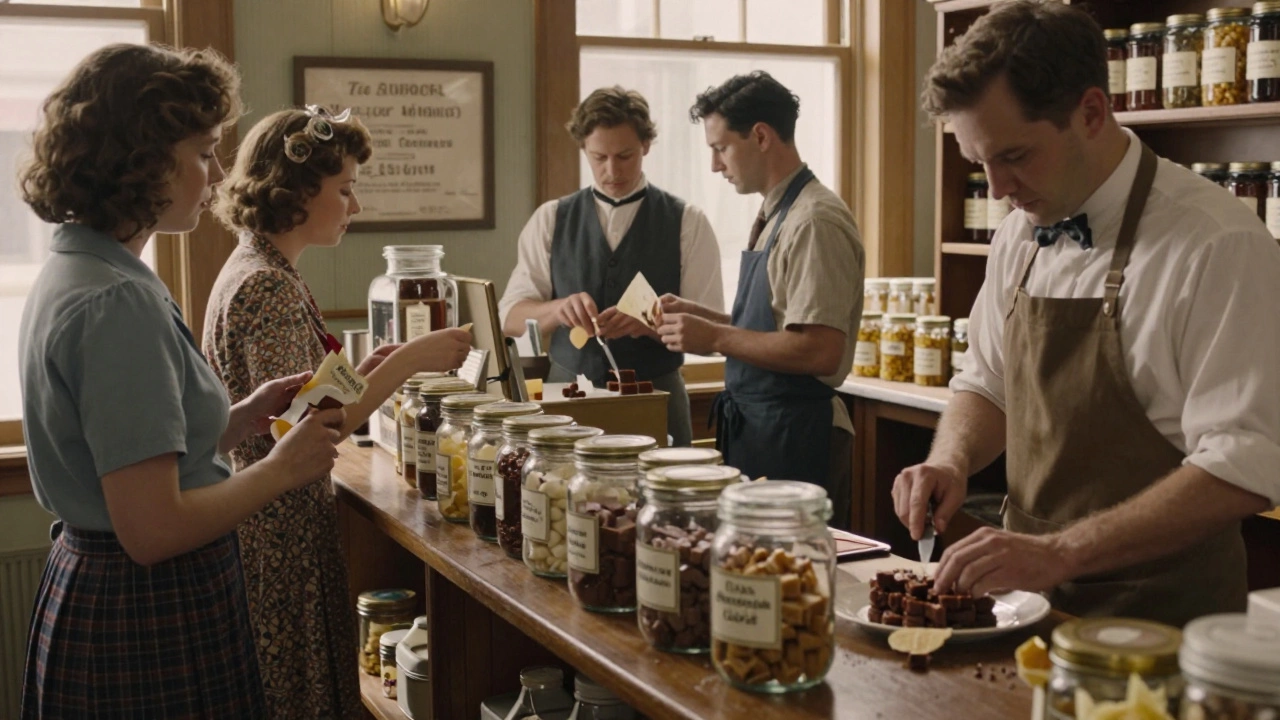
If you want to taste fudge the way it was meant to be-handmade, fresh, and simple-head to small-town candy shops. In the U.S., places like Mackinac Island in Michigan still make fudge the old way, with copper kettles and wooden paddles. In Canada, the town of Niagara Falls has dozens of fudge makers using maple syrup. In the UK, you’ll find it at seaside stalls in Brighton or Edinburgh. The key? Look for shops that make it on-site. If you can see the steam rising from the pot, you’re in the right place.
Fudge isn’t just a sweet. It’s a slice of history. And it all started with a mistake in a kitchen in Baltimore. Sometimes, the best things come from messes.