Macaron Size Calculator & Visualizer
Calculate baking times, filling volumes, and visualize dimensions for any macaron size.
Baking Specifications
Have you ever picked up a French macaron is a delicate almond meringue cookie sandwiched with ganache, buttercream, or jam filling and wondered why some fit perfectly in your palm while others look like tiny dessert plates? The answer isn't random. Macaron sizes are strictly defined by professional baking standards, though home bakers often play fast and loose with the rules. Understanding these dimensions changes everything about how you bake, fill, and package them.
If you are trying to calculate costs for a wedding order or just want to know if your piping bag tip is too big, knowing the exact millimeters matters. A difference of just one centimeter can change the structural integrity of the shell and the ratio of filling to cookie. Let's break down the specific measurements you need to know.
The Standard Macaron: The Goldilocks Size
When most people say "macaron," they are referring to the classic, bite-sized version found in high-end patisseries like Ladurée or Pierre Hermé. This is the industry standard for a reason: it offers the perfect balance of crunch, chew, and flavor without overwhelming the palate.
| Measurement Type | Metric Value | Imperial Value |
|---|---|---|
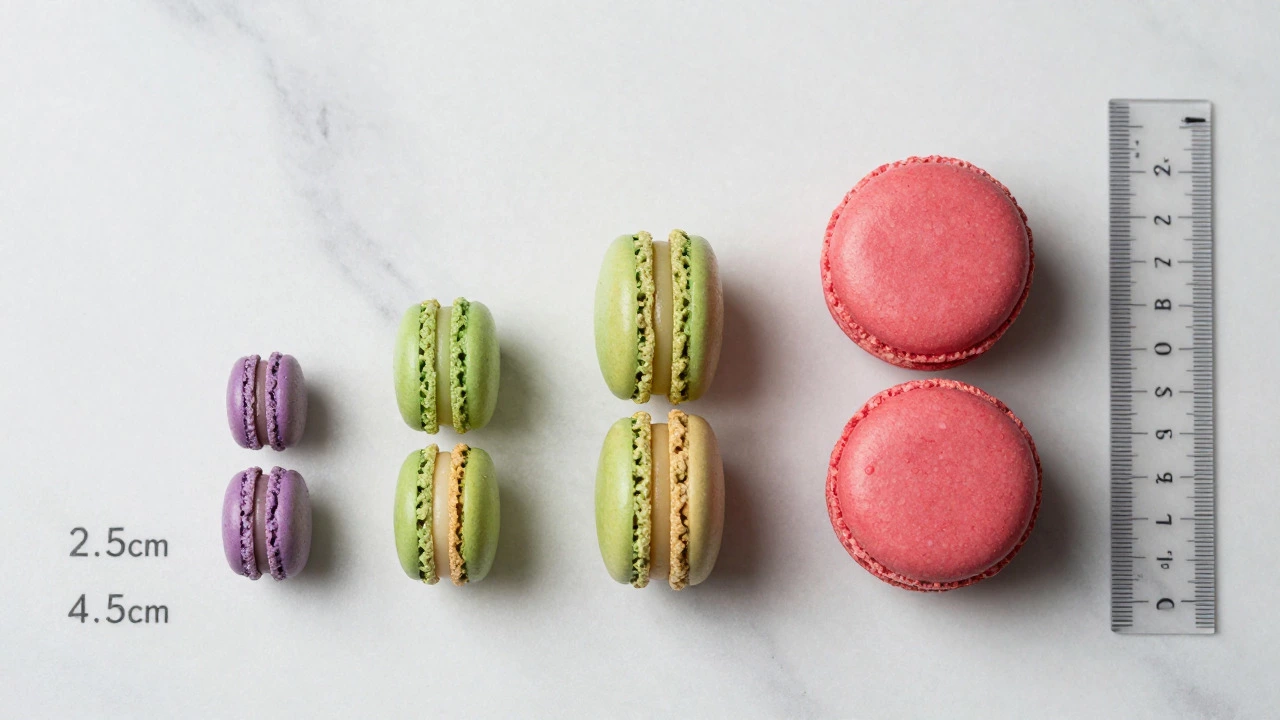
| Diameter (Shell) | 4 cm - 5 cm | 1.5 inches - 2 inches |
| Height (Filled) | 1.5 cm - 2 cm | 0.6 inches - 0.8 inches |
| Piping Tip Diameter | 1 cm - 1.2 cm | 0.4 inches - 0.5 inches |
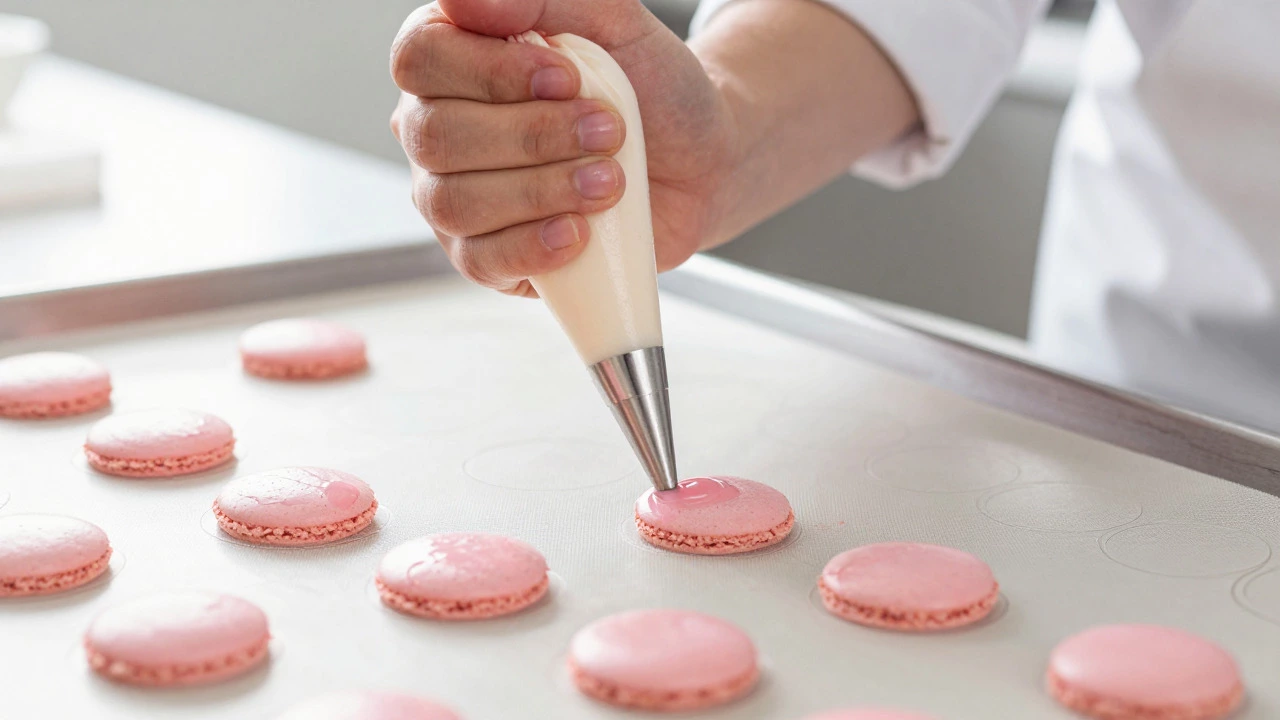
This size requires a piping tip that is approximately 1 centimeter wide. If you use a larger tip, your shells will spread too much during baking, resulting in thin, crispy cookies rather than the desired airy interior. The height is equally important. A standard macaron should be tall enough to hold a generous amount of filling but not so tall that the shell cracks under the weight. Aim for a filled height of about 1.5 centimeters. This ensures that when you take a bite, you get the signature "foot" (the ruffled edge at the base) along with the smooth top and the creamy center.
Mini Macarons: The Party Favorite
Mini macarons, also known as petite macarons, have exploded in popularity for weddings, baby showers, and corporate gifts. They are visually striking because you can serve them in large quantities without breaking the bank on expensive ingredients like almond flour and vanilla bean paste.
These tiny treats typically measure between 2.5 cm and 3.5 cm in diameter (about 1 inch). Because they are smaller, they require a finer piping tip, usually around 0.5 cm to 0.7 cm. The challenge with minis is consistency. It is much harder to pipe uniform circles when the target area is so small. One slight hesitation with the wrist can ruin the shape. However, they bake faster-usually in 8 to 10 minutes compared to 12 to 15 minutes for standard sizes. This quick bake time means you have less margin for error regarding oven temperature fluctuations.
Jumbo and Oversized Macarons: For Showcases
On the other end of the spectrum, you have jumbo macarons. These are not your average snack; they are statement pieces. You will often see these in luxury gift boxes or as centerpieces for special events. A jumbo macaron measures anywhere from 6 cm to 8 cm in diameter (2.5 to 3.2 inches).
Baking jumbo macarons introduces new technical hurdles. The larger surface area means the batter takes longer to dry out before baking, which increases the risk of cracking. If the skin doesn't form properly, the macaron will rise unevenly and split open. To combat this, bakers often let jumbo shells rest for a longer period-sometimes up to an hour-before putting them in the oven. Additionally, the filling volume must increase proportionally. A standard teaspoon of filling won't suffice; you might need a tablespoon per shell to maintain the structural balance and flavor profile.
Why Exact Measurements Matter for Baking Success
You might think that eyeballing the size is fine, but precision is the secret weapon of successful macaron making. The ratio of sugar to egg whites to almond flour is calibrated for a specific surface area. When you change the size, you change the evaporation rate and the heat distribution within the cookie.
- Small Shells: Dry out quickly. If you bake them for the same duration as large ones, they will become hard and brittle. Reduce baking time by 2-3 minutes.
- Large Shells: Retain moisture longer. They require a slightly lower oven temperature and more time to ensure the center is cooked through without burning the edges.
- Filling Ratio: The general rule of thumb is that the filling should fill about 50% of the internal volume of the shell. A deviation here leads to either a dry, crumbly bite or a soggy, messy one.
For home bakers, using a silicone mat with pre-printed circles is non-negotiable if you want consistent results. These mats come in various sizes, allowing you to switch between mini, standard, and jumbo simply by changing your piping technique rather than guessing.
Choosing the Right Size for Your Project
Selecting the right macaron size depends largely on the occasion and your budget. Here is a practical guide to help you decide.
| Occasion | Recommended Size | Reasoning |
|---|---|---|
| Wedding Favors | Mini (2.5 - 3.5 cm) | Cost-effective; guests can try multiple flavors easily. |
| Coffee Shop Menu | Standard (4 - 5 cm) | Perfect single-serving size; pairs well with espresso. |
| Luxury Gift Boxes | Jumbo (6 - 8 cm) | Visually impressive; feels premium and indulgent. |
| Kids' Parties | Mini or Standard | Easier for children to handle; less likely to crush. |
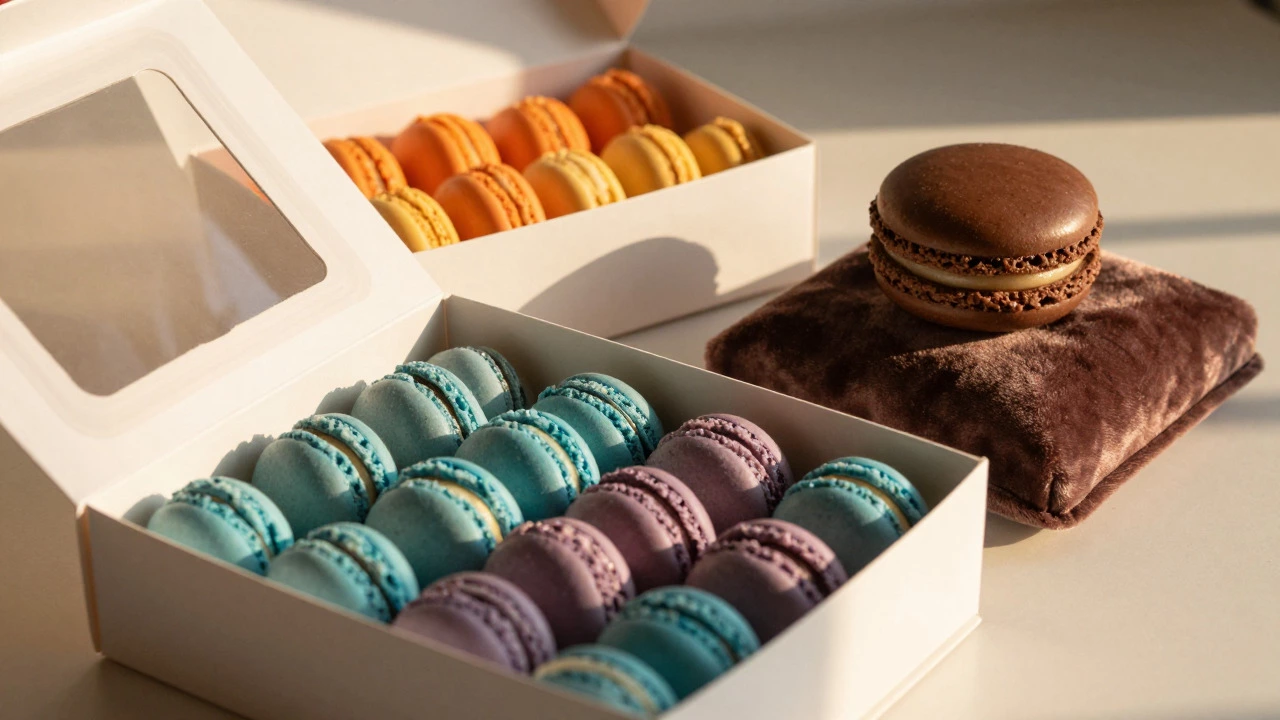
If you are selling macarons, consider the packaging constraints as well. Standard macarons fit neatly into six-count boxes. Minis allow for twelve or even eighteen counts in a similar footprint, which can justify a higher price point due to the perceived abundance. Jumbo macarons often require custom packaging to prevent damage during transport, adding to your overhead costs.
Troubleshooting Size-Related Issues
Even experienced bakers run into problems when switching sizes. Here are common issues and how to fix them.
Problem: Feet are missing on mini macarons. This usually happens because the batter was over-mixed or the oven temperature was too low. Mini shells need a strong initial rise to form feet. Ensure your oven is fully preheated and check the batter consistency-it should flow like lava, not drip like water.
Problem: Hollow centers in jumbo macarons. Large shells are prone to hollows if the air bubbles aren't properly removed during the macaronage process (mixing the batter). Tap your baking sheet firmly against the counter to release trapped air. Also, avoid over-baking; large macarons continue to cook after being removed from the oven due to residual heat.
Problem: Uneven spreading. If your piped circles look like blobs instead of neat rounds, your piping tip might be too large for the desired size. Switch to a smaller tip and apply steady, even pressure. Stop squeezing before the circle is complete; the batter will settle slightly.
Final Thoughts on Macaron Dimensions
Mastering macaron sizes is about understanding the physics of baking. Each dimension has its own set of rules regarding drying time, baking temperature, and filling volume. Whether you are aiming for the elegance of a standard 4-centimeter shell or the impact of an 8-centimeter jumbo, precision in measurement leads to consistency in quality. Start with standard sizes to build your skills, then experiment with minis and jumbos once you feel confident in your technique. Remember, the best macaron is the one that looks as good as it tastes, and getting the size right is half the battle.
What is the most common size for a French macaron?
The most common size for a French macaron is between 4 cm and 5 cm (1.5 to 2 inches) in diameter. This is considered the standard size for both commercial bakeries and home bakers because it provides the ideal texture and portion control.
How many mini macarons fit in a box designed for standard macarons?
A standard six-count macaron box can typically hold 12 to 18 mini macarons, depending on the exact dimensions of the mini shells and the thickness of the dividers. Mini macarons are roughly half the diameter of standard ones, allowing for significantly more units in the same space.
Do jumbo macarons take longer to bake?
Yes, jumbo macarons generally take 2 to 4 minutes longer to bake than standard macarons. Due to their larger mass, they retain more moisture and require additional time in the oven to ensure the center is fully cooked without burning the exterior. Always monitor them closely near the end of the baking time.
What piping tip size should I use for standard macarons?
For standard macarons (4-5 cm), use a round piping tip with a diameter of approximately 1 cm to 1.2 cm (about 0.4 to 0.5 inches). This size allows you to pipe consistent circles that will spread slightly during baking to achieve the desired final diameter.
Can I make macarons any size I want?
Technically, yes, but there are limits. Extremely small macarons (under 2 cm) are difficult to pipe consistently and may burn quickly. Extremely large macarons (over 8 cm) are prone to cracking and hollow centers. Sticking to the established ranges of mini (2.5-3.5 cm), standard (4-5 cm), and jumbo (6-8 cm) yields the best results.