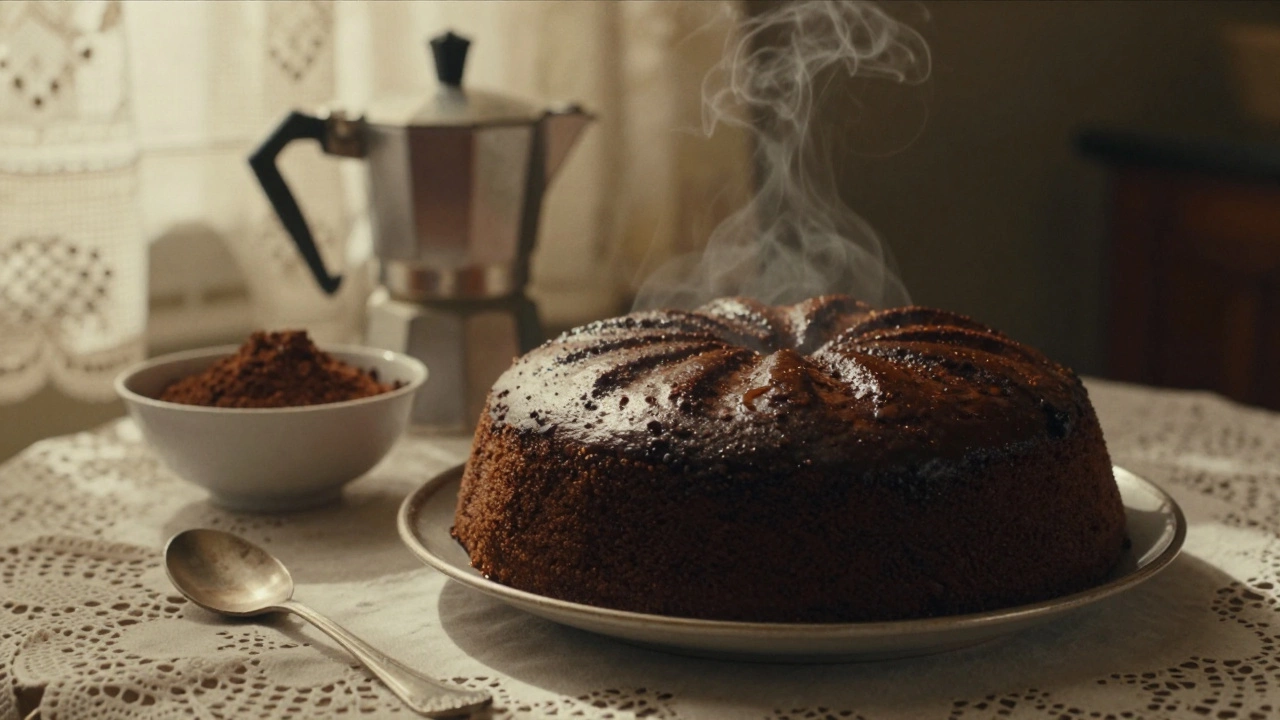
Devil's Food Cake vs Regular Chocolate Cake
Devil's Food Cake
A dense, deeply chocolatey cake that's often described as "almost black" due to its rich color.
- Key Ingredients: More cocoa powder (often unsweetened), coffee or hot water, oil
- Texture: Moist, fudgy crumb with higher fat content
- Flavor: Intense chocolate flavor with slight bitterness
- Origin: Early 1920s American baking culture, created as "devil's food" as contrast to angel food cake
Regular Chocolate Cake
A standard chocolate cake with a lighter brown color and more balanced flavor profile.
- Key Ingredients: Less cocoa, often uses melted chocolate or milk, butter or oil
- Texture: Lighter texture, less dense than devil's food
- Flavor: Sweet chocolate flavor with less intensity
- Origin: Traditional chocolate cake recipes dating back to earlier baking traditions
Key Differences
| Feature | Devil's Food Cake | Regular Chocolate Cake |
|---|---|---|
| Color | Very dark (almost black) | Medium brown |
| Chocolate Intensity | Strong, intense flavor with slight bitterness | More balanced, sweeter chocolate flavor |
| Primary Cocoa Type | Unsweetened cocoa powder | Typically sweetened cocoa or melted chocolate |
| Moisture Source | Often uses oil instead of butter | Usually uses butter |
| Texture | Dense, fudgy, moist crumb | Lighter, less dense texture |
| Historical Context | Created as "devil's food" as contrast to angel food cake | Traditional chocolate cake with longer history |
Why the Name Matters
The name "devil's food" wasn't about evil or darkness in a literal sense—it was a clever marketing strategy to create a dramatic contrast with "angel food" cake. Devil's food was designed as the "sinful" indulgence to angel's food's purity. This linguistic play created a memorable distinction that still resonates today.
What's the Difference You'll Notice?
Based on the article content, the key difference between these cakes is that devil's food cake:
- Uses more unsweetened cocoa powder
- Often includes coffee or hot water to enhance chocolate flavor
- Typically uses oil instead of butter for moisture
- Has a darker color and denser texture
Ever bitten into a rich, dark chocolate cake and wondered why it’s called devil cake? It sounds dramatic-almost sinister. But the name doesn’t come from a spooky recipe or a haunted bakery. It’s actually a playful twist on a classic dessert that started in the early 1900s in the United States. The truth behind the name is more about marketing, contrast, and a little bit of culinary rebellion than anything occult.
The Rise of Devil’s Food Cake
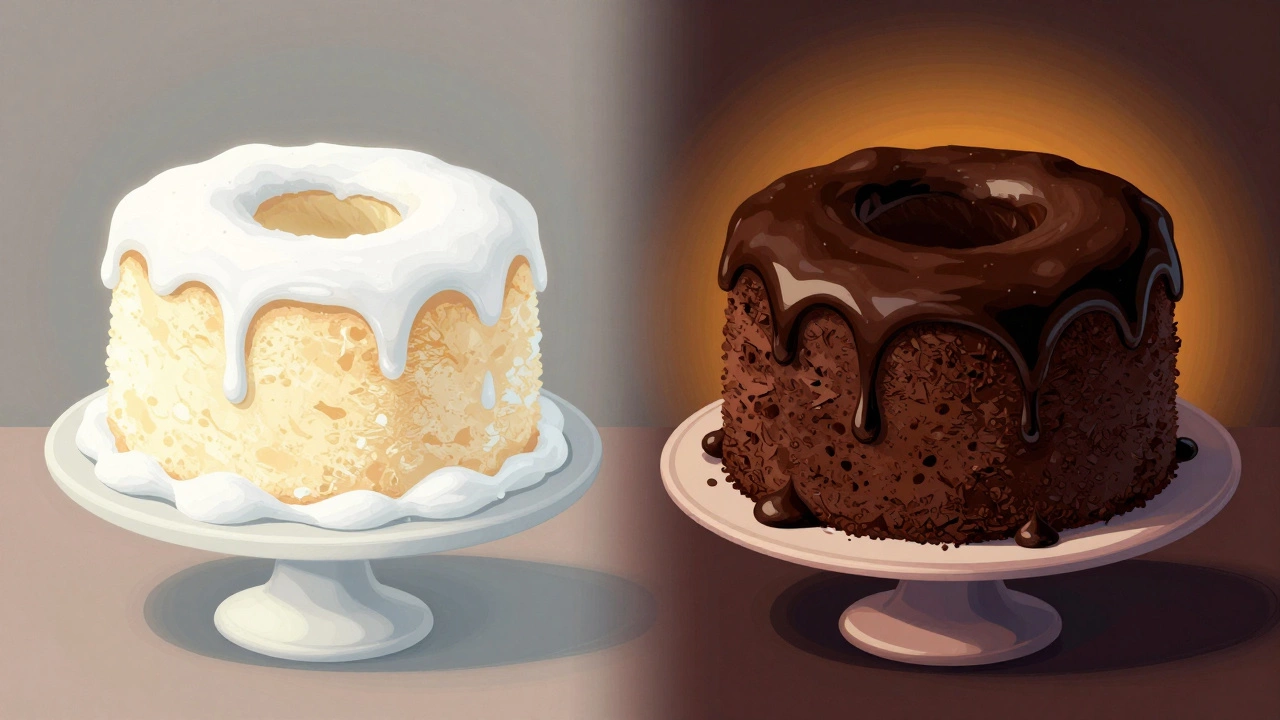
Before devil’s food cake became a staple at birthday parties and bake sales, there was angel food cake. Light, airy, and made with egg whites, angel food cake was the white, delicate counterpart to heavier desserts. It was called "angel" because it was pure, ethereal, and almost too light to be real.
Then came devil’s food cake. It was the exact opposite: dense, deeply chocolatey, and loaded with fat and sugar. Bakers in the 1920s and 1930s started using the term "devil’s food" as a cheeky way to describe this indulgent, almost guilty pleasure of a cake. It wasn’t about evil-it was about temptation. The name stuck because it created a fun, memorable contrast: angel vs. devil, light vs. dark, simple vs. sinful.
What Makes It Different from Regular Chocolate Cake?
Not all dark chocolate cakes are devil’s food cakes. There’s a real difference. Devil’s food cake typically uses more cocoa powder-often unsweetened-and sometimes includes coffee or hot water to deepen the chocolate flavor. It’s also usually made with oil instead of butter, which gives it a moist, almost fudgy crumb. The batter is darker, richer, and more intense than a standard chocolate cake.
Traditional devil’s food cake often includes a touch of baking soda, which reacts with the acidity in the cocoa and coffee to make the cake rise higher and turn an even deeper brown. That’s why you’ll see it described as "almost black" in old recipe books. Some versions even use melted chocolate or extra cocoa butter to boost the richness.
Compare that to a regular chocolate cake, which might use melted chocolate, milk, and less cocoa. It’s still delicious, but it doesn’t have that same deep, almost bitter edge that defines devil’s food. The name isn’t just about color-it’s about flavor intensity and texture.
Why "Devil’s Food" and Not Just "Devil Cake"?
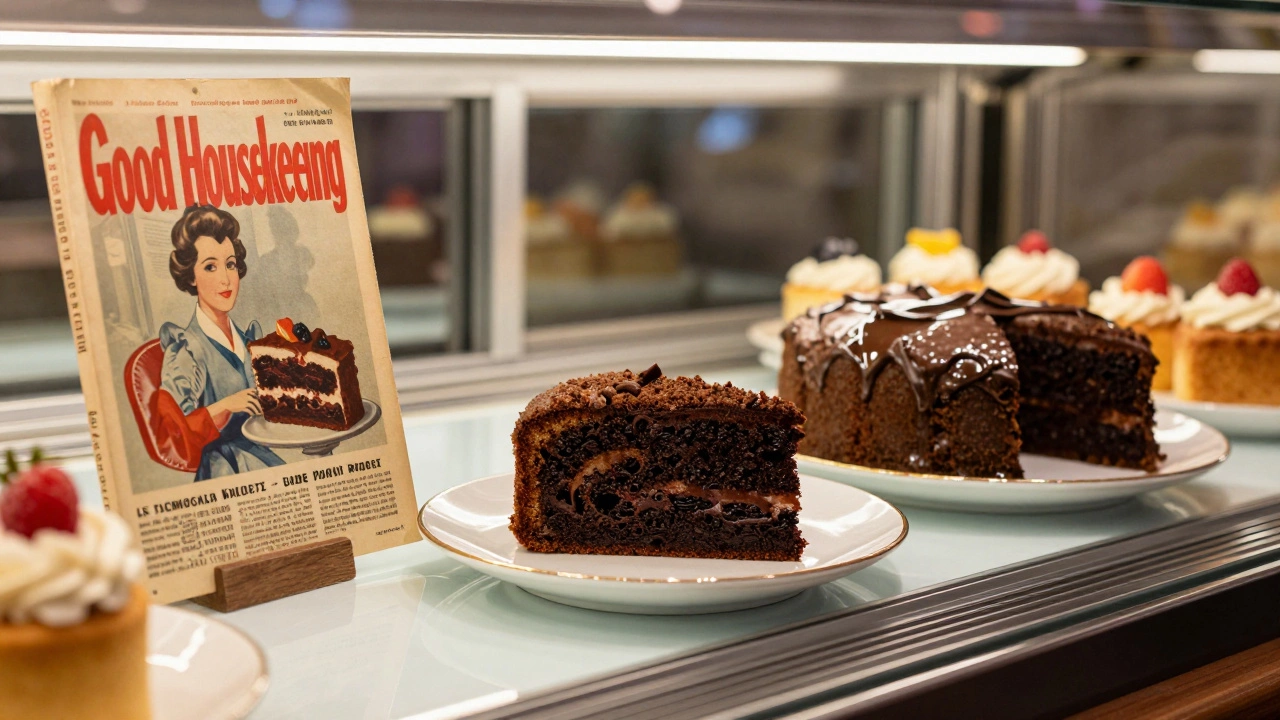
You might notice that the full name is "devil’s food cake," not just "devil cake." That’s because "food" was added to make it clear this was a type of cake, not a dessert with demonic ingredients. Early recipes from the 1920s, like those published in Good Housekeeping and The Boston Cooking-School Cook Book, consistently used "devil’s food" to describe the cake. Over time, people started shortening it to "devil cake," but the original term is still the correct one.
There’s also a linguistic quirk here: "devil’s food" follows the same pattern as "angel food." Both are compound phrases where the first word modifies the second. "Angel food" = food fit for angels. "Devil’s food" = food fit for the devil. It’s poetic, not literal.
Did the Name Ever Cause Controversy?
Surprisingly, yes. In the 1930s and 1940s, some religious groups in the U.S. objected to the name, calling it inappropriate to use religious imagery in food. A few churches even banned devil’s food cake from bake sales. But the public didn’t care. The cake was too delicious to ignore. By the 1950s, the name had become so popular that even major brands like Hershey’s and Duncan Hines used "devil’s food" on their packaging to sell more cocoa and cake mixes.
Today, you’ll find devil’s food cake in supermarkets, bakeries, and home kitchens across the world. The controversy is long gone. What remains is a beloved dessert with a bold name that still makes people smile.
How the Name Spread Around the World
Devil’s food cake didn’t become popular outside the U.S. until the late 20th century. In the UK, where chocolate cake traditions leaned toward fruitcake or sponge cake, devil’s food was seen as an exotic American treat. British bakers didn’t have a direct equivalent-until the 1980s, when American TV shows and cookbooks started showing up on shelves.
Now, you’ll find devil’s food cake in Bristol cafés, London bakeries, and even in some Irish dessert menus. It’s often labeled as "American chocolate cake" on menus, but the name "devil’s food" is still used by serious bakers who know the difference. It’s become a global symbol of indulgence, not because of its ingredients, but because of the story behind it.
Modern Twists on a Classic Name
Today’s bakers are playing with the name even more. You’ll see "Devil’s Food Brownie," "Devil’s Food Cupcake," and even "Devil’s Food Cheesecake." Some chefs make vegan versions with aquafaba and dark cacao, calling them "Devil’s Food Delight" to keep the spirit alive.
But the core hasn’t changed. Whether it’s a layered cake with chocolate ganache or a simple sheet cake with powdered sugar, the goal is still the same: to deliver a rich, dark, deeply satisfying chocolate experience that feels like a treat you shouldn’t have-but absolutely do.
Why the Name Still Works Today
There’s a reason the name survives. It’s not just about taste-it’s about emotion. The word "devil" makes you pause. It makes you curious. It adds drama to dessert. In a world of bland food labels and overly safe branding, "devil’s food" stands out. It’s a tiny rebellion on a plate.
People don’t buy devil’s food cake because they think it’s cursed. They buy it because it sounds exciting. It promises more than just sweetness-it promises depth, intensity, and a little bit of fun. And that’s why, nearly 100 years later, we still call it by that name.
Is devil’s food cake the same as black forest cake?
No, they’re completely different. Devil’s food cake is a dense, chocolatey American cake with cocoa, coffee, and often a chocolate frosting. Black forest cake is a German dessert made with layers of chocolate sponge, cherries, and whipped cream, often soaked in cherry brandy. The flavors, origins, and ingredients don’t overlap.
Can you make devil’s food cake without coffee?
Yes, you can. Coffee isn’t required-it’s used to enhance the chocolate flavor, not to make the cake taste like coffee. If you skip it, just replace it with hot water. The cake will still be rich and dark, but the chocolate notes might be slightly less complex. Some bakers use a splash of vanilla or a pinch of espresso powder instead for depth.
Why is devil’s food cake so dark?
The deep color comes from a combination of unsweetened cocoa powder, baking soda, and sometimes coffee. Baking soda raises the pH level, which causes the cocoa to darken through a chemical reaction called alkalization. This is why Dutch-processed cocoa, which is already alkalized, makes an even darker cake. It’s chemistry, not magic.
Is devil’s food cake gluten-free?
Traditional devil’s food cake is not gluten-free because it uses wheat flour. But you can easily make a gluten-free version by swapping the flour for a 1:1 gluten-free baking blend. Many modern recipes do this successfully without losing the dense, fudgy texture that defines the cake.
Was devil’s food cake originally a Southern recipe?
No, it wasn’t. While the American South has a strong tradition of rich desserts, devil’s food cake emerged in the Midwest and Northeast in the early 20th century. It became popular through national magazines and cake mix companies, not regional kitchens. Its roots are in urban American baking culture, not plantation desserts.