Paris Macaron Budget Calculator
1. Choose Your Source
Select where you plan to buy. Prices reflect October 2026 averages.
Estimated Cost
Based on 6 units from Ladurée at standard city pricing.
💡 Smart Saving Tips
- • Buy single pieces to sample expensive flavors without committing to a full box.
- • Avoid airport shops; they charge up to 25% more than city boutiques.
- • Check for "mini" packs which often have higher per-unit costs.
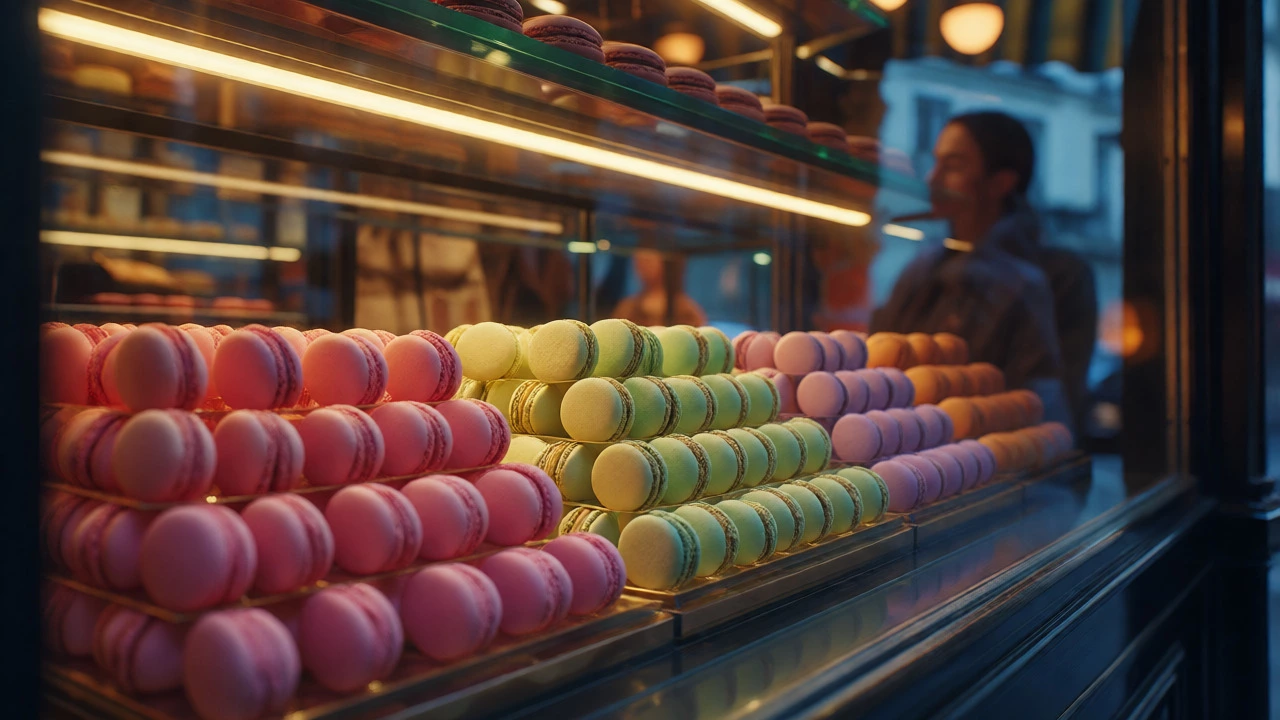
You land at Charles de Gaulle, grab your metro ticket, and head straight for the Marais. You see a display window glowing with pastel perfection-rows of macarons stacked like jewels. Your stomach growls, but then you glance at the small white tag next to the box. Is it €15? €30? €50? The sticker shock is real, and if you don't know what to expect, you might walk away hungry or overspend on a souvenir that tastes better than it costs.
Here is the truth: there is no single price for a macaron in Paris. It depends entirely on where you buy them, who made them, and how many you want. A single cookie from a neighborhood bakery might set you back €2.50, while a gift box from a historic maison could hit €40 for just six pieces. This guide breaks down exactly what you will pay in October 2026, so you can plan your budget without guessing.
The Price Hierarchy: From Supermarket to Luxury Maison
To understand the cost, you need to look at the market tiers. Paris isn't just one big bakery; it's a spectrum of quality and branding. If you are looking for a quick snack, the supermarket aisle is your friend. Brands like Lafayette or generic store brands sell boxes of 8 to 12 macarons for around €5 to €8. These are decent, but they lack the crisp shell and moist filling of artisanal versions. They are fine for a picnic, but not for a memory.
Move up to local patisseries, and the price shifts. A standard independent bakery in a non-touristy arrondissement charges between €2.50 and €3.50 per piece. If you buy a box of six, expect to pay €15 to €20. This is the sweet spot for most travelers. You get fresh, high-quality ingredients without paying for the brand name alone.
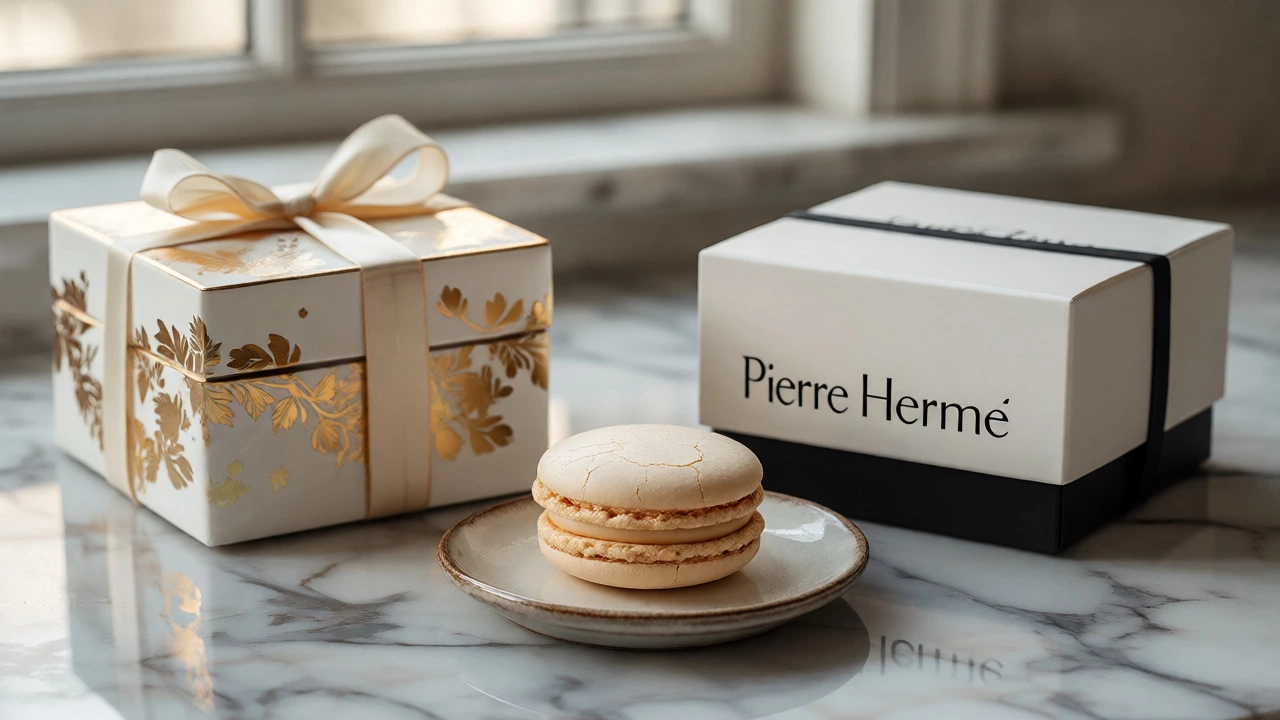
Then there are the giants. Ladurée and Pierre Hermé define the luxury tier. In 2026, their pricing reflects their global fame and consistent quality. A classic box of 6 macarons at Ladurée now costs approximately €29.50. At Pierre Hermé, a similar selection hovers around €31. For a larger box of 12, you are looking at €55 to €60. Yes, that is nearly €5 per cookie. But remember, you are buying into history, packaging, and a specific texture profile that mass producers cannot replicate.
Ladurée vs. Pierre Hermé: A Cost Comparison
When people ask about macaron prices, they usually mean these two names. While both are expensive, their value propositions differ slightly. Ladurée leans heavily on tradition and gifting culture. Their boxes are ornate, often featuring gold leaf and ribbon. You are paying for the presentation as much as the taste. Pierre Hermé, known as the "Picasso of Pastry," focuses more on innovative flavor combinations, like Ispahan (rose, lychee, raspberry). His packaging is sleeker, modern, and minimalist.
| Brand Type | Box Size | Price Range (EUR) | Best For |
|---|---|---|---|
| Supermarket | 8-12 units | €5 - €8 | Picnics, casual snacking |
| Local Patisserie | 6 units | €15 - €20 | Daily treat, good quality/value |
| Ladurée | 6 units | €29.50 | Gifts, special occasions |
| Pierre Hermé | 6 units | €31.00 | Flavor exploration, foodies |
| Sadaharu Aoki | 6 units | €28.00 | Japanese-French fusion fans |
If you are on a tight budget but still want a premium experience, consider Sadaharu Aoki. He offers Japanese-inspired flavors like matcha and yuzu. His prices are slightly lower than Hermé, sitting around €28 for a box of six, but the quality remains exceptional. Another option is Jacques Genin, whose caramel-filled macarons are legendary. His prices are comparable to Hermé, but his limited locations make him harder to find-and arguably worth the hunt.
Hidden Costs and Tourist Traps
Location matters more than you think. Buying a box of macarons inside the Louvre Museum or near the Eiffel Tower can add a 20% markup compared to buying them in the 11th arrondissement. Why? Because those shops pay higher rents and target tourists who rarely check the unit price. Always look for the price per kilogram or per piece listed on the menu board, not just the total on the box.
Also, watch out for "mini" boxes. Some shops advertise a "starter pack" of four macarons for €18. That works out to €4.50 each, which is pricier than buying a standard six-pack from the same shop. Unless you have a tiny appetite, the math rarely favors the smallest option. However, if you are traveling light and worried about shelf life, smaller boxes prevent waste. Macarons are best eaten within 24 to 48 hours. They do not travel well across continents unless vacuum-sealed, which changes the texture.
Another trap is the "assorted" label. Sometimes, an assorted box includes cheaper flavors like plain vanilla or chocolate, while single-flavor boxes feature premium options like pistachio or salted butter caramel. Check the contents list. If you hate chocolate, don't buy the mixed bag just because it looks pretty.
How to Save Money Without Sacrificing Quality
You don't have to skip macarons to stay on budget. Here are three proven strategies used by locals and savvy travelers:
- Buy Single Pieces: Most reputable patisseries allow you to buy individual macarons. Pick your favorite flavors instead of committing to a full box. This lets you sample expensive flavors like rose or lavender for €3 each, rather than risking €30 on a box you might not love.
- Avoid Airport Shops: The CDG and Orly airport boutiques charge a premium for convenience. A box that costs €30 in the city might be €38 at the gate. Buy your souvenirs in the city center before heading to the terminal.
- Visit Early Morning: Freshness peaks early. While this doesn't always change the price, it ensures you aren't paying premium rates for day-old stock. Some bakeries also offer slight discounts on leftover boxes later in the evening, though selection is limited.
If you really want to save, look for bakeries affiliated with MOF (Meilleur Ouvrier de France) titles. These artisans compete for prestige rather than tourist dollars. Their prices are often mid-range (€2.80-€3.20 per piece), but the technique is top-tier. Places like Cyril Lignac or Philippe Conticini offer excellent value without the massive brand tax of Ladurée.
Is a €5 macaron twice as good as a €2.50 one? Not necessarily. But it is significantly different. High-end macarons use almond flour sourced from specific regions, egg whites aged for days, and pure vanilla beans or natural fruit purées. Cheap versions use almond extract, artificial colors, and stabilizers to keep the shell smooth during shipping. The texture is the biggest differentiator. A luxury macaron should have a delicate crackle on top, a smooth foot (the ruffled edge), and a chewy interior that melts in your mouth. Mass-produced versions tend to be crumbly or overly sweet to mask inferior ingredients. When you pay €30 for a box, you are paying for consistency and sensory precision. You are also paying for the environment-the marble counters, the glass cases, and the service that makes you feel like you're stealing a moment of Parisian elegance. For many, the experience is part of the product. Sitting in a tea room at Ladurée on the Champs-Élysées, sipping hot chocolate, and eating a macaron slowly is a ritual. That atmosphere has a price tag. If you just want sugar, go to the supermarket. If you want a story to tell when you get home, pay for the maison. Generally, yes. Due to proximity to suppliers and high competition among bakers, Paris offers some of the most competitive prices for high-quality macarons globally. In cities like New York or London, imported or locally produced luxury macarons often carry a 15-25% markup due to import taxes, rent, and labor costs. However, supermarket brands may be similarly priced worldwide. Yes, but with caution. Macarons are fragile and sensitive to humidity. They typically last 24-48 hours at room temperature. If you are flying long-haul, ask the shop for a vacuum-sealed box or an ice pack. Note that customs regulations vary by country regarding dairy products; since macarons contain egg whites and sometimes buttercream, check your destination's agricultural import rules. Most countries allow commercially packaged pastries, but homemade ones might be restricted. Standard flavors like vanilla, chocolate, and raspberry are usually included in the base price. Premium flavors such as saffron, truffle-infused ganache, or rare fruits like yuzu and passion fruit often cost €0.50 to €1.00 extra per piece. Seasonal limited editions, like chestnut in autumn or rose in spring, may also carry a surcharge due to ingredient scarcity. No, you do not need a reservation to purchase boxed macarons from any shop, including Ladurée and Pierre Hermé. However, if you wish to sit down for tea or lunch at their salons, reservations are highly recommended, especially during peak tourist seasons (June-August) and holidays. The takeaway counter operates on a first-come, first-served basis. The primary cost driver is almond flour, which is expensive to produce and source. Additionally, the process is labor-intensive. Each batch requires precise meringue whipping, piping, and baking times that must be monitored closely. Waste is common if batches fail. Finally, prime real estate in Paris commands high rents, which bakers pass on to consumers. You are paying for raw materials, skilled craftsmanship, and location.
What Are You Actually Paying For?
Frequently Asked Questions
Are macarons cheaper in Paris than in other countries?
Can I bring macarons home from Paris?
Which flavor is the most expensive?
Do I need a reservation to buy macarons?
Why are macarons so expensive?